
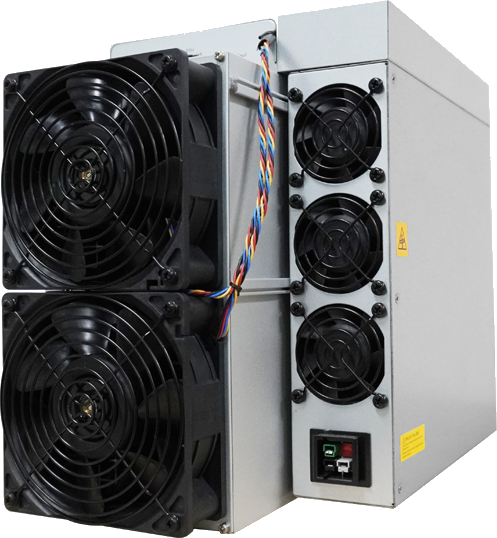
What makes the L9 different
The Antminer L9 is a Scrypt ASIC, not a Bitcoin ASIC. Bitmain's public catalog lists it at 16 GH/s, 3360W, and 210 J/G. Scrypt hashrate is quoted in gigahashes because the algorithm and hardware class differ from SHA-256 Bitcoin miners. A 16 GH/s Scrypt miner is not weaker than a 270 TH/s Bitcoin miner in any direct way; they are working on different networks and payout markets.
Scrypt mining is commonly associated with Litecoin and Dogecoin because Dogecoin can be merge-mined alongside Litecoin through many pools. The miner may also support other Scrypt coins listed by the manufacturer or pool. The appeal is exposure to a different mining economy than Bitcoin, but that also means the revenue model must use Scrypt payouts rather than BTC hashprice.
How Scrypt hashrate becomes profit
For the L9, the practical revenue metric is payout per GH/s per day from the Scrypt pool or calculator you trust. The formula is: gross daily revenue = 16 GH/s x current payout per GH/s per day. That payout depends on Litecoin difficulty, Dogecoin price, merged-mining accounting, pool fees, stale shares, and the set of auxiliary coins the pool includes.
The electric bill is easier. The L9 draws 3.36 kW. Over 24 hours, that is 80.64 kWh. At $0.08/kWh, power costs about $6.45 per day. At $0.12/kWh, it costs about $9.68. At $0.18/kWh, it costs about $14.52. At $0.12/kWh, the miner needs about $0.61 per GH/s per day just to cover electricity. If your Scrypt pool payout is below that after fees, the miner is losing money before repairs and downtime.
Computers, GPUs, and setup
The L9 is its own mining computer. It contains the Scrypt ASIC chips, control board, cooling fans, and network interface. You can configure it from a basic laptop, used office desktop, mini PC, or phone browser on the same network. The host computer does not need a strong GPU, because it is not doing the hashing.
GPUs can mine some altcoin algorithms, but they are not a substitute for the L9 on Scrypt. A multi-GPU rig needs a motherboard with PCIe slots, risers, a high-capacity PSU, careful airflow, and operating-system maintenance. The L9 condenses Scrypt mining into a dedicated box. The tradeoff is flexibility: a GPU rig can switch algorithms, while the ASIC is only useful where Scrypt mining pays.
Electrical load and heat
At 3360W, the L9 is beyond ordinary plug-and-forget equipment. At 240V it draws about 14 amps, so a dedicated 240V circuit is the normal starting point, and continuous-load planning should leave margin. Long extension cords, shared garage circuits, weak receptacles, and undersized PDUs can become fire risks when a miner runs all day.
The heat load is also continuous. 3360W x 3.412 is roughly 11,500 BTU/hr. In a small room, that heat accumulates quickly. Air-cooled Scrypt miners need strong intake air, direct exhaust routing, and dust control. Even though the L9 is air-cooled, water cooling is still worth mentioning because mining equipment is moving toward hydro and immersion for better thermal stability, less fan dependence, and more practical heat reuse.
Who should consider it
The L9 fits a miner who wants Scrypt exposure and understands that Dogecoin and Litecoin economics can diverge from Bitcoin economics. It may be attractive when Scrypt payouts are strong, power is cheap, and the operator wants a self-contained ASIC instead of maintaining GPUs. It is less attractive where power is expensive or noise and heat cannot be managed.
Before buying, model several payout cases. Ask what happens if DOGE price falls, Litecoin difficulty rises, the pool changes merged-mining credits, or your summer cooling costs jump. The L9's hashrate is real, but the actual profit is the spread between Scrypt revenue and a 80.6 kWh daily power bill.